Showing posts with label Barclays. Show all posts

Tuesday, January 20, 2015

Retention Year 2

Last year, my father called up his favorite banks and asked if there were any offers to compel him to keep their credit cards open for another year. After all, spending $65-95 every year for each premium credit card can start to add up... especially when we have 30+ cards. So either (a) the banks will have to give him more than that in value each year or (b) will have to waive the fee.

Some cards that we will keep open forever include the Starwood American Express cards (as it helps us re-qualify for Starwood Platinum status each year, offers 2x on Starwood spend and has great Amex promotions) and United Select Visa (as it helps my father re-qualify for United Gold status each year and offers 3x on United spend).

But coincidentally, these were the ones we threatened to cancel last year in the hopes to receive an attractive retention offer. Recall that last year, my father received 2,000 SPG points in exchange for paying the $65 annual fee for his SPG Amex and an additional 5,000 United miles for paying the $95 annual fee for his United Select Visa.

But every year is different.

This time around, my father called Amex and asked to be transferred to an Amex Retention Specialist. My father said he was doing some planning for which credit cards to use and which to cancel for 2015, then asked if there were any upcoming Amex promotions he should know about. Unfortunately, he was told that since he received a promotional offer last year, he was ineligible for another one this year. No harm, no foul.

He did, however, fare better with Chase when he called to inquire about his United Select Visa. This front line customer service representative was authorized to offer my father a $100 statement credit if he kept his card open another year. That would more than offset the $95 annual fee, so he was actually being paid $5 to keep the card. This offer was on top of the regular 5,000 United miles that he receives each year anyway.

Then another day, we called for my mother's Chase British Airways Visa. We signed up a year ago when they were offering 100,000 BA Avios for spending $20k in the first 12 months. We used those BA miles to fly us to Chicago last year and to fly our friends to Orlando last week. When we discussed waiving the annual fee, they told us it wasn't an option. So we told them we'd like to close the account. Then came an offer to give us 9,000 Avios for spending $1,500 in the next three months. That comes out to 6x vs. the usual 1.25x per dollar spent.

So my father accepted that offer and kept the card open. We quickly found a way to spend $1,500 in a few transactions that week and now are awaiting the bonus to post in the Feb 1st statement. Even though we receive the bonus, we'll still close the card afterwards, since the bonus was only contingent upon spending $1,500 on the card and not paying the $95 annual fee.

We still have to call Citi (for my mother's American Airlines Amex) and Barlcays (for my father's US Airways Mastercard), but we'd be OK with closing those down if no compelling offers are made.

[UPDATE: For my mothers American Airlines Amex, we were given a $95 statement credit if we made a $95 purchase, which was actually $10 more than the $85 annual fee. For my father's US Airways Mastercard, they refunded him $89 for the annual fee, though he was only charged $44.50 for the annual fee.]

Wednesday, June 18, 2014

Our Travel Wallet

Over a year ago, my father was kind enough to open up his wallet with my LCD readers. There, he offered an inventory of all the various credit cards he and my mother currently had open (though not all of them were actively used).

Big warning! We are not suggesting that any of you fine upstanding readers follow my crazy parents down this financial rabbit hole. Unlike the popular bloggers, we don't get paid if you sign up for credit cards. 

If you have any outstanding debt at all (student loans, credit card, personal loans or mob gambling debt), then you're better off not opening more credit cards, because you're probably spending more than you're making and ruining your future. The interest charges alone will destroy any point/mile value you may receive. The last thing you need is another credit card.

Recall, there are 3 different types of reward credit cards.

A. One Night Stands (for the sign up bonus)
B. Booty Call (ongoing benefits)
C. Marriage (bonus spending)

Despite having 33 open credit cards from 7 different banks, we only regularly use 8 of them each month (Booty Call). And of those 8, we primarily use just 4 of them (Marriage). The remaining (One Night Stand) cards sit quietly in a zip lock bag hidden somewhere where my toddler hands can't get to them.

Which three cards does my father keep in his excessively slim wallet? Well, I'm glad you asked...

1. Amex Blue - earns 5% cash back on all spend at gas, grocery and drugstores.
2. Citi Thank You Premier - earns 3x on all restaurant spend
3. Amex Starwood - earns 1x on all regular spend and 2x on Starwood Hotel spend (our personal favorite)
4. Chase Ink Bold - earns 5x on internet, cable, cell phone and office supply stores and 2x on hotels and gas


The above lineup is his regular "starting rotation" when he's in the United States.

Sidenote: I tried to find a photo with the 2014 Yankees starting rotation, but there weren't any magazine covers including David Phelps, Chase Whitley, Vidal Nuno with the regular starters Hiroki Kuroda and Masahiro Tanaka.

I qualify that this is his US wallet because a few of these cards aren't as rewarding when you step outside America. The two American Express cards charge an additional Foreign Exchange (FX) fee of 2.7% when used abroad. Since my father hates sub-optimal outcomes within his direct control, he sits those cards on the bench whenever he grabs his passport.

So on this current trip to Israel (via Switzerland), we had to re-shuffle the deck a bit. Kind of like when the Yankees are in the playoffs and are facing a dominantly left-handed batting lineup.

Both the Citi Thank You Premier and Chase Ink Bold were created for travelers so they don't have FX fees. Since we do plan to eat while traveling, we were definitely keeping the Thank You card. However, we use the Ink Bold card primarily for utilities at home and small businesses expenses at Staples, so we left that card at home as well since our monthly cable/internet bill is set on auto-pay anyway.

So out of the 4 card slots, we had 3 open.

First, we needed an ATM card to access cash. So we took our Charles Schwab ATM card which as I mentioned before does not charge any ATM fees worldwide. We've found getting cash from a reputable foreign bank's ATM is the best exchange rate.

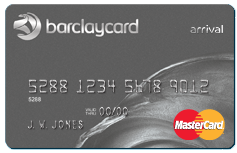
Second, we needed a FX fee-free Mastercard to pair with our Citi Thank You (Visa). Fortunately back in March, my father applied for the Barclays Arrival+ World Mastercard which offers a very interesting rewards program where you basically get 2.2% back in the form of travel spend credits.

Every charge you make earns you 2 Arrival miles which can be used to redeem against travel expenditures at $0.01 per mile. But then you also get 10% back. The Arrival miles program is exceptionally easy to use and travel redemption can be put on charges we just made, even though the monthly statement hasn't closed.

In fact, this week we used 5,000 Arrival miles to remove $50 from the Zurich taxi charge from last week and then instantly received 500 Arrival miles back (10% rebate). My father really underestimated this card, but the Arrival+ could be our Masahiro Tanaka - a new surprise addition that is really paying off!

Third, we had a utility slot available. No specific needs on this final card, so we went back and told our veteran workhorse American Express Starwood card that we changed our mind. While we wouldn't use this card at any foreign locations, invariably, there are times when my parents need to make an online charge based in the United States (daycare, medical bills, shopping, etc). Since those transactions would be processed in America using US dollars, the 2.7% FX fees wouldn't come into play at all.

So there you have it, the starting international rotation:

1. Citi Thank You Premier Visa - for all restaurant spend or where only Visa is accepted
2. Barclays Arrival+ Mastercard - for all other international spend or where only MC is accepted
3. Schwab ATM card - for cash withdrawls in local currencies
4. Amex Starwood card - for any US-based transactions that we need to make while abroad

Now, if only my father would agree me to add this adorable little kitten to my rotation.


Friday, March 21, 2014

Father's March Credit Card Churn

After a long(ish) hiatus from the credit card application game, my father jumped right back in this week. His very first credit card churn was about 2 years ago in early 2012 when he applied for just a two new credit cards including, a CapitalOne Venture card (100,000 points worth $1,000 of travel statement credits) and a Chase Sapphire Preferred Visa (50,000 points worth anywhere from $625 of travel credit or up to ~$1,500 of United MileagePlus frequent flyer miles).

Over those two years, he's just been applying to cards that seem to offer nice bonuses (which were basically almost all travel reward cards at the time), but very little rhyme or reason beyond that. Here are some highlights of my father's credit card application successes:
However, now that he's more sophisticated, he plans out his credit card application strategy with long term vision and purpose.

Big Warning
If you have any debt at all (student loans, credit card, personal loans or mob gambling debt), then you're better off not opening more credit cards, because you're probably spending more than you're making and ruining your future. The last thing you need is another credit card.
  • The credit card companies will only issue these premium reward credit cards to individuals with high credit scores (above 700 FICO). Applying and getting rejected hurts your score even more, so don't try until you're confident you'll get approved. 
  • The points and miles you earn (valued at up to 2-4% of your spend) will be negated if you carry a balance and have to pay 15-25% interest. All that money you're paying in interest and late charges could pay for the trips you're trying to get for free. 
  • And if you have trouble overspending, keep in mind that the average person spends 15% more when they use a convenient plastic credit card to make purchases instead of using hard earned cash. Something about seeing your empty wallet makes you thing twice about buying that extra Starbucks.

Background
As stated above, his last round of credit card applications was back on August 11, 2013. He didn't have an immediate need for anything other than Starwood SPG points, so he applied for the American Express SPG Business credit card (30,000 points after spending $5,000 in 6 months) and the Barclays Arrival World MasterCard (40,000 Barclay Arrival miles worth about $440 in travel related statement credits).

The good news was that American Express approved him instantly, but the bad news was that Barclays denied him for "having too many recent inquiries on his 2 year credit history." Despite calling into the Reconsideration Line (888-232-0780) to speak with their credit analyst and reminding them that he had a stellar credit score, 100% on-time payment history, and a healthy income in excess of our monthly rent obligations, they denied his application.

Not a huge loss, but still a disappointment, given the flexibility of having Barclay Arrival miles. I'm not paid by the credit cards to get people to apply, so I won't go into the benefits of the Barclays Arrival card, but I'm sure you can all use this wonderful website called Google if you want more info.

Typically, after a round of applications, my father would wait 90 days and then apply for some more. Instead of keeping this schedule, he skipped a round in November 2013 and waited an additional 120 days before applying again in March 2014.

Applications

1. Chase Ink Bold 
Type: Business card
Bonus: 50,000 UR points
Min Spend: $5k in 3 months
Bonus Earning: 5x cell phone, cable, internet, office supply and 2x hotels and gas

My father's best friends are starting a new small business together called Five Star Painting IL. As a part of that, he set up a small business checking account with our dear friends at Chase. Why Chase? Well, they have the best business credit cards on the market right now!

We used up a lot of our United miles and Hyatt points during 2013 (business class flights from Thailand and Israel; 7 nights at Park Hyatts in Paris and Buenos Aires) and for upcoming 2014 travel (business class flights to Italy/Greece).

So with the new business relationship, they were MORE than happy to allow him to apply for one of their premier (read expensive) business credit cards, the Ink Bold Visa. Given the upfront costs of starting up a new business, the $5,000 minimum spend in 3 months should be taken care of pretty quickly. Now, even though there's a $95 annual fee, the first year is waived. Guess what's gonna happen 11.5 months from now?

But there's a strong chance we end up keeping this card, because it does offer 5x points on cell phone bills, internet, cable television and office supply store purchases. Additionally, it offers 2x on hotels and gas station purchases. So clearly the bonus earning potential could overshadow the $95 annual fee. But in all likelihood, we'll have another Chase Ink card to apply for with another free 1st year.

2. Citi Thank You Premier 
Type: Personal card
Bonus: 20,000 + 30,000 Thank You Points 
Min Spend:  $2k in 3 months and another $3k in Year 2
Bonus Earning: 3x on restaurants/entertainment and 2x on airfare/hotels

Citi is actually pretty clever. Realizing how many people like my parents are sly enough to take advantage of the huge upfront sign on bonus and free 1st year, they re-structured their Thank You Premier bonus to incentivize you to keep the card for a (paid) second year by staggering the full bonus over 2 years.

I kind of think that if my father could quickly spend $3,000 in the 1st month of his 2nd year, then he would get the 30,000 point bonus and still be able to cancel to reverse the $125 annual fee. Unclear if we'll want to pursue that option, because having this Premier card does allow my parents to redeem their Thank You points at a 1.25 cents/pt instead of he usual 1.00 cents/pt using my no fee Thank You card. Meaning, 50,000 Thank you points would be worth $625 in air fare instead of just $500.

So as we go into March 2015, if I have 0 Thank You points left, then clearly I have no reason to pay $125 to keep the Premier card. However, if I have 50,000+ Thank You points, then paying $125 to keep the Premier card would be offset by the incremental $125+ of TY point redemption:
  • Premier: 50,000 Thank You points x 1.25 cents/pt = $625 value 
  • Regular: 50,000 Thank You points x 1.00 cents/pt = $500 value (a difference of $125)
So we'll see where we're at a year from now.

3. Barclays World Arrival
Type: Personal card
Bonus: 40,000 Arrival Miles
Min Spend: $3k in 3 months
Bonus Earning: 2x on all purchases

Barclays has been one tough bank to crack. It took my father a few different attempts to get this card (see above), but fortunately, having waited 6-7 months between rounds of applications and only applying for 2 cards the prior round must have helped his chances. Plus, he's been putting $100-200 of charges each month on his Barclays US Airways credit card to show a little love to them. Regardless of the exact reason, he was approved for the Arrival card which earns 2 Arrival miles for all purchases.

After reaching his $3,000 minimum spend requirement, we'll receive 40,000 bonus Arrival miles (they're really "points," but I digress) plus 6,000 miles for spending that $3,000 (each $1 purchase is 2x). These Arrival miles can be redeemed for 1.0 cent/mile for statement credits towards travel related expenses or 0.5 cent/mile for non-travel related expenses. Unlike other bank currencies that can be used directly as currency for purchases, to redeem these "miles," you actually make the purchase using your Arrival card (as normal). Then after the travel related transaction posts to your account, you log in and apply your miles for a statement credit to lower your outstanding balance.

The negative is that it's an extra step or two. However, that's more than compensated by the fact that my travel related purchase also earns me additional Arrival miles. For example, if I have both (a) 40,000 Arrival miles and (b) 40,000 Chase UR points and want to purchase a $400 ticket to Los Angeles, then I could either:
  1. Transfer 25,000 Chase UR points to United MileagePlus miles and then hope that my desired flight is available for the Saver Level of 12,500 each way. Then pay about $5 cash in taxes. However, the ideal flight will likely not be available at the Saver Level (essentially a Blackout Date).
  2. Use 32,000 Chase UR points (worth 1.25 cents/pt) to buy the exact ticket he wants and have 8,000 Chase UR points left. No cash used in the transaction and nothing posts to my credit card statement.
  3. Purchase the ticket for $400 and have it charged to my Barclays Arrival card. My Arrival miles balance goes up 800 for the purchase, leaving me with 40,800 Arrival miles. Then after it posts to my credit card, I redeem 40,000 Arrival miles as a statement credit to remove the $400 charge. End of the day, I have $0 outstanding balance PLUS 800 Arrival miles left over.
The great benefit of using my miles/points in either scenario #2 or #3 is that my flight is now a "paid flight" which means I can continue to earn frequent flyer miles for these trips. If I actually used frequent flyer miles (United, American, US Airways, etc) in scenario #1, then I'd get no additional mileage credit.

In addition, the Arrival card has a great feature where they will credit you back 10% of all your Arrival mile redemptions. So in the above example #3, after redeeming 40,000 Arrival miles, they will add back 4,000 Arrival miles to my account. So while I needed to have the full 40,000 miles in my account to get the $400 statement credit, at the end of the day, I'm only using a net 36,000 miles. So my final ending balance should be 4,800.

But because the card gives you 2x on ALL purchases, this one would be great for us to use whenever we need to buy something that won't qualify for any categories bonuses on our other cards.

4. US Bank FlexPerks
Type: Personal card
Bonus: 20,000 Arrival Miles
Min Spend: $3.5k in 3 months
Bonus Earning: 2x on gas, groceries &airlines

Similar to Barclays, this was my father's second attempt to get a card with US Bank. Back in 2012, he tried to get their credit card that would earn 3x FlexPoints on all charity related spending (which we prioritize in our family's budget). But at that time, he was denied for having too many recent inquiries.

So now, with his new strategy of waiting longer between applications, he thought he stood a much better shot and he was right. While he was not approved instantly online, he did eventually get automatically approved after waiting for US Bank to complete their review. His calls into their Application Status line (800-947-1444) weren't helpful at all, because it wasn't a Reconsideration Line, but just a Status Update line. They kept telling my father that his application was being reviewed in their standard operating procedure and that there were no red flags. Just sit tight, Dad!

But now that we've been approved, we'll get 20,000 FlexPoints. While this may seem somewhat low, remember that not all points are created equally. It's easiest to think about them as different foreign currencies. In fact, 20,000 FlexPoints can be redeemed for up to a $400 flight. Similar to Chase UR or Citi Thank You, using FlexPoints on a flight is treated as a paid flight so there will be no blackout dates and you will earn frequent flyer miles for the trip.

The downside of FlexPoints is however that you're essentially redeeming 20,000 FlexPoints for a certificate that can use to buy 1 flight (up to $400 in value). Meaning, if you're not paying attention, you might end up redeeming 20,000 FlexPoints for a flight that you could have bought for just $200. In reality, we'll probably not be able to find a flight that's exactly $400. Perhaps $350 or maybe even $380, but likely we're leaving some money on the table.

5. Discover IT
Type: Personal card
Bonus: $150 Statement Credit
Min Spend: $750 in 3 months
Bonus Earning: 5x on rotating categories

My mother already has the Discover IT card and we've been using it for its rotating 5x categories (Q1 was restaurants and movies). But it's not unlimited earnings since they're capped at $1,500 of bonus category spending per quarter. So by having two different Discover IT cards, we're essentially raising our total cap to $3,000 per quarter. Obviously, my parents will never actively TRY to spend more money than usual just for bonus points, but there are times where it's nice to get 5x points for paying for a large group dinner and having your friends reimburse you.

Unfortunately, the first quarter is about to end, so my father's card probably won't be delivered until April when the Q2 bonus category will change to Home Improvement Stores (Home Depot, Lowes, etc). While my family's probably not in the market for an outdoor grill or light fixtures, I do know of a small business starting up that will have to buy a lot of paint...

But we figured that since we're already applying for 4 cards, we might as well throw in another one to pick up an easy $150 (essentially getting a 20% rebate on our first $750 of spending).

Other Card Considered
I suppose we could have applied for another American Express card product, but there really weren't any Amex Cards we wanted right now, especially since you cannot have had the product for at least 1 year before you're allowed to get the sign up bonus again (Amex Platinum, Starwood Amex, etc). There's even a rumor that American Express will start a new policy where only 1 sign up bonus can be awarded per lifetime.

And instead of the Citi Thank You Premier card, we could have also applied to Citi American Airlines Executive Card that's being offered right now with 100,000 American Airline miles. But to get the bonus, you need to spend $10,000 in 3 months and a pay a $450 annual fee (not waived). While you would get a $200 statement credit for American Airline purchases (partially offsetting the $450 fee), we didn't need more AA miles (already have almost 400,000 of them in our family accounts), didn't plan to fly AA anytime soon and didn't want to take on more required minimum spending than we could reasonably do in 90 days. Plus, not a fan of paying $250 in fees even if the miles are worth much more. So we went with the Citi Thank You Premier which only required $2,000 in spending and had the first year annual fee waived.

Total Minimum Spend Required
Most of the cards give you 3 months to hit your minimum spending requirements. But since we're opening 5 at once, we have the same 90 days to knock out $14,250:
  1. $5,000 on Chase Ink Bold for 50,000 UR points (~$1,000 value)
  2. $2,000 on Citi Thank You Premier for 20,000 Citi Thank You points (~$250 value)
  3. $3,000 on Barclays Arrival for 40,000 Arrival miles (~$440 value)
  4. $3,500 on US Bank FlexPerks for 20,000 FlexPerk points (~$400 value)
  5. $750 on Discover IT for $150 cash rebate ($150 value)
For our efforts, we'll receive 130,000 points + $150 in cash rewards through sign up bonuses. By our estimates, that's potentially worth $2,240 of value. In addition to the sign up bonuses, we'll also earn for the spending the required $14,250. From that spend, we'll receive at least another 17,250-28,500+ points which will be worth an additional $270-470 of value.


While almost $5,000 a  month may seem impossible for a small family of 3 without going into credit card debt, we do have a lot of tricks up our sleeve to help "spend" that much without actually spending anything.

To be continued...


Tuesday, February 4, 2014

Retention Offers

It's February 2014 and my family has now been playing this travel reward credit card game for the past two years. And even at 2 years old, I have been benefiting from their financial discipline and resourcefulness.

Big warning! If you have any outstanding debt at all (student loans, credit card, personal loans or mob gambling debt), then you're better off not opening more credit cards, because you're probably spending more than you're making and ruining your future. The interest charges alone will destroy any point/mile value you may receive. The last thing you need is another credit card.

While the miles/points game can allow an ordinary person to stretch their limited dollars to travel well beyond their usual means, it is definitely not a "free" game to play. For example:

1. Round trip business class flights to Europe this summer using United miles still cost us $163/person in taxes (vs. retail $4,000+/person).

2. 6 night stay at the Conrad Koh Samui in Thailand was all on Hilton points, but we still had to pay overpriced hotel prices for our daily meals on the property which came out to about $25/person per meal (vs. retail $850/night x 6 nights for the room).

3. Having over 20 active credit cards currently open that all offered a lucrative sign up bonus (50,000-100,000 miles/points) as well as bonus spending categories (2x-5x per dollar charged) gets us a lot of loyalty program currency, but many of these cards also charge $95+ annual fees after the 1st year. Assuming half of our cards have annual fees, that's ~$950 in fees for the privilege of using them for another 12 months.

Of course, there's not much my father can do about the cash cost for #1 and #2, but he can mitigate much of #3 by just getting a hold of the Credit Card Retention representatives.

There's a lot of discussion in the blogosphere about credit card Sign Ups. That's primarily because the bloggers get paid by the credit card companies to get people to sign up for their cards. Not me of course - I'm only 2 years old. I only talk about the cards that my parents sign up for and/or use for illustrative purposes. I don't really care if you get a card or not.

But while there's a lot of public attention around the card sign up, there's little said about the other end of the spectrum - the card cancellation. This end is where my father's OCD nature gets us the proverbial "second bite at the apple."

February 2014 Cancellations
Last February, my parents had their Credit Card Churn (signing up for a lot of credit cards at the same time).
  • Some of these new cards were No Fee cards, which meant we could keep them open forever. 
  • However, many were only waiving the annual fee for the first year, then $95/year each and they weren't worth keeping for another year if we had to pay the fee. 
  • In addition, there were a few reward cards we had for a few years because they were great to keep around, even after paying the fee.
In total, we had 7 cards coming due for their annual fee.

A. Starwood Preferred Guest Amex ($65 annual fee)

If you've been reading LCD for a while, you'll know that this card is my father's all time favorite. He uses this for all his non-bonus spending (anyplace where he would only earn 1x points). It's really the only way to accumulate a significant number of SPG points, because actually staying a night at a Starwood hotel doesn't get you that many points.

He's had this card since 2009 and has been paying the $65 annual fee since 2010 (after his 1st year). For him, it's been worth it because he accumulates SPG points, gets 2 stays/5 night credit towards his SPG elite status each year and is an American Express card. As you may know, Amex often runs several amazing promotions each year (such as Small Business Saturday) that will save you significant money, especially since the promotions are available to each unique Amex card (even if the cards are authorized users under the 1 master account). Since we have 3 authorized users under my father's account, we get the promotional benefit 3x, even though we pay just one $65 annual fee.

But on February 2, the 2014 annual fee posted to his account. While he had NO real intentional of cancelling the card, he called the number on the back of his SPG Amex and got an account representative.

Father: "I just got charged the $65 annual fee. I'm not sure I'll use the card enough this year to be worth the fee. I think I'd like to cancel."

Rep: "I see, well, you've had the card since 2009 and you've been using it quite actively. Let me transfer you to our account specialist who can see what they can do for you."

Specialist: "Sir, this is one of the best cards for earning points and miles. It's the only card that allows you to transfer points to both American Airlines and Delta at a 1:1 ratio. And also, if you transfer in increments of 20,000 points, you get an additional 5,000 miles, which is a 1.25x ratio."

Father: "I understand, but I'm not sure that's worth paying the annual fee for. I've actually been using other cards that offer me better bonuses (like 2x) on my spending."

Specialist: "Sir, I'd hate to lose your business. I can offer you a $25 statement credit to partially offset the fee."

Father: "Um, I'm not sure that's of interest to me. Is there anything else you can offer?"

Specialist: "Well, Starwood allows you to buy SPG points. $35 for 1,000 SPG points. Instead of the $25 statement credit, I can offer you 2,000 SPG points, which would be $70 if you purchased them yourself."

Father: "Wait, to be clear, are you offering me the ability to pay $70 for 2,000 SPG points?"

Specialist: "No, sir. Of course you could always just do that yourself if you wanted, the 2,000 points would be a gift for keeping the card another year."

Father: "And paying the $65 annual fee."

Specialist: "Yes, sir."

Father: (deliberate long pause) "OK, I'll take that offer."

So for a credit card that he planned to pay $65 for and keep another year anyway, he received a bonus 2,000 SPG points, which are worth $50-70 to us based on our usual 2.5-3.5 cents/pt redemption history.

B. Chase United Select ($95 annual fee)

This card was another of my father's long time favorites (since 2009). In addition to earning 3x United miles on United.com purchases, it also earned him 1x Premier Qualifying Miles (PQM) up to $5,000 on United.com purchases. Many times, this extra perk of 5,000 PQM was the difference between getting to that next tier of status (Platinum in 2013 and Gold in 2014). Plus, it earns 2x on gas, groceries and restaurants and already comes with an automatic 5,000 United mile annual bonus each year you keep the card. And the fact that this card is no longer offered anymore makes it all that much more special to my father.

So under no circumstances would he ever cancel this card. However, we wanted to see if he'd be offered a retention bonus as well, so he played a little game of credit card chicken.

Father: "I just got charged the $95 annual fee. I'd like to cancel."

Rep: "I see, well, you have an outstanding balance of $XXX. Let me transfer you to a specialist."

Specialist: "Sir, I understand you'd like to close the account. I just want to remind you that this card is a great one for earning United miles. We don't offer this card anymore. As you know, you can 3x on United purchases as well as 2x on gas, groceries, home improvement stores. It also comes with 5,000 annual bonus miles which we've already sent to your account. In fact, this past statement you've earned over 24,000 United miles."

Father: "I understand, but I've been starting to use other cards for my travel spending, including many of your own Chase cards like the Sapphire Preferred"

Specialist: "Wow, yes, I see that you have several cards with us. Well, we'd hate to close your account so perhaps I can look in my system to see what promotions you're eligible for... I can offer you 2 additional United Club passes good for 6 months."

Father: "Um, I actually already have United club access for being a United frequent flyer. Is there anything else you can offer?"

Specialist: "Well, I can offer you an additional 5,000 United miles. If you wanted to purchase that yourself, it would be well over $100 cost."

Father: (deliberate long pause) "Wow, OK. That's very generous. I'll take that offer."

So for another card that he was already willing to pay the $95 fee for, he received another free 5,000 United miles, worth about $100 to us, especially since my father's United account was wiped out after our redemption last week.

C. Citi American Airlines American Express ($95 annual fee)

Unlike the first two, this card was completely expendable after we earned 50,000 American Airline miles for the initial sign up a year ago. This card was my mother's account, and my father already had one in his account. So no need for duplicate benefits (free checked bags, priority boarding) for the same airline that we hardly fly anyway.

Of course, we'd gladly keep the card if the $95 fee were waived or we received an offer worth more than the fee. Since we don't really fly American Airlines, it's hard to keep my mother's AAdvantage account active without doing something excessive (buying something we don't need or donating miles). Otherwise, after 18 months of inactivity, the account closes and the miles are wiped out. But spending a bit on the card every so often adds miles to her AAdvantage account and resets the expiration date by another 18 months.

Father: "I opened this card about a year ago and I know I'll be charged the $95 annual fee. I'd like to close the account before the fee hits."

Rep: "I see, well, you have 30 days after the fee actually posts to cancel without paying it, but let me transfer you to a specialist."

Specialist: "Sir, I understand you'd like to close the account. [insert review of the card benefits here] "

Father: "I understand, but I'm not sure I want to pay another $95 annual fee."

Specialist: "Well, let me see what promotions we're offering. I can offer you a 2 part promotion. First, we give you a $95 statement credit which will offset the fee, but you have to still pay the fee normally. The statement credit will automatically be processed. Second, there's a special bonus offer for an extra 1,000 AA miles for each month that you spend at least $1,000 for the next 16 billing statements."

Father: "So what happens if I spend $1,000 in March, but then the $95 statement credit posts, bringing my total below $1,000."

The Specialist repeated the original terms verbatim, but didn't actually answer the question. After 2 iterations, she finally understood.

Specialist: "Oh I see, well, you'd still get the 1,000 mile bonus" (but she sounded very uncertain)

Father: "Well, OK. I'll take that offer."

Since there was a $95 statement credit to offset the fee, keeping the card for another year was a no brainer. It gave my mother an easy way to keep her AAdvantage account active as well as retained a lot of Available Credit with Citi, so that we could use it as leverage to trade in when we applied for future Citi cards. The fact that we'd essentially earn 2x AA miles for $1,000 of spending each month was a nice plus, but not overwhelmingly amazing. We'll see if we take full advantage of that or not.

D. Citi American Airlines Business Mastercard ($95 annual fee)

While my mother had the Citi personal card version, my father had also applied for the Citi business card version at the same time last February. While the sign up bonus at the time was only 35,000 AA miles, it was the best Citi business card offer at the time, so he decided to apply for it anyway.

Similar to before, the benefits of this Citi AA card was also 100% duplicative with the personal card versions, so there was little reason to keep the card if we had to pay another fee. However, since it was a business card, the available credit didn't count for my father's personal credit score. So keeping it or closing it, wouldn't impact it at all.

Father: "I opened this card about a year ago and I know I'll be charged the $95 annual fee. I'd like to close the account before the fee hits."

Rep: "I see, well, we do have other no fee cards that we can convert this into, including our Thank You card where you'd earn Thank You points. That one has no fee. I can transfer you to our specialist to handle that for you."

Father: "Hmm, are there any other options?"

Rep: "You can close the account outright."

Father: (after some thinking about converting the card) "Actually, I think I'd to close the account." My father actually wanted to be transferred to the specialist who would have the authority to make additional (better) retention offers. Then if he had to, he would close the account. While he thought about downgrading to the no-fee Thank You business card, he opted against that since it would then make him ineligible for getting a sign up bonus on that card later on.

Rep: "OK, let me transfer you to the specialist."

After a 2 minute hold, the original representative got back on the line.

Rep: "There wasn't a specialist available, but I have authorization to close the account, so I've done that for you. Do you have any other things I can help you with? "

Father: "No, I'm all set. Thank you."

While not the ideal outcome, my father wasn't too concerned about the account closure since he was 100% prepared to cancel the card anyway. But lesson learned that sometimes when you play chicken, you can lose.

E. Barclays US Airways Mastercard ($89 annual fee)

My father signed up for this card because (a) it was a Barclays card and we had too many Chase/Citi/Amex cards, (b) US Airways was set to merge with American Airlines and the miles would be consolidated and (c) there was times when flying US Airways was our best option since they were currently in the Star Alliance with United and we could credit the miles to United or Aegean Airlines.

In addition to the 2x on US Airways purchases, the card also offered priority check in and priority boarding (but no free checked bags). The other perks were a set of $99 Companion Pass and Lounge Passes. We ended up using the $99 Companion passes for a flight to Austin last month but ended up never needing the lounge passes (which will expire at the end of this month) because we got access to the US Airways lounges using our expired American Express Platinum cards.

For paying the $89 annual fee this month, we'll get another set of Companion Passes and Lounge Passes, but now that US Airways will leave the Star Alliance on March 30th, we'd no longer be able to credit our flights to United or Aegean. Thus, no more reason to fly US Airways. Upon reading reports, it seemed that many Barclay representatives were willing to waive the $89 fee with little/no discussion. So my father was hopeful.

Father: "I opened this card about a year ago and I know I'll be charged the $95 annual fee soon. I'd like to close the account before the fee hits, because I'm not sure what will happen to this card after the American-US Airways merger."

Rep: "I see that the charge will be posted on February 28th. I can transfer you to the specialist who will be better suited to explain everything about the merger."

Specialist: "Hi, sir, let me first tell you about the merger. The merger was completed late last year but the airlines will continue to operate independently for another year. Accordingly, their frequent flyer programs will also continue to be independent through 2014 and will be combined sometime in 2015. As such, Barclay will continue to service this US Airways card for the next year. But if you'd like to avoid the fee, I can permanently eliminate the fee on the card. You will continue to earn US Airway miles."

Father: "Really? So no fee ever?"

Rep: "That's correct."

Father: "Wait a minute. Will I still have the same version of the card or will I be getting a new card with different benefits?"

Rep: "You will no longer get the companion passes or priority boarding..."

Father: "But will I still earn 2x miles on US Airways purchases?"

Rep: "You will have the opportunity to continue accelerating your mileage balance through spending."

Father: "But will I still earn 2x miles on US Airways purchases?"

Rep: "You will earn 1 mile for each dollar spent on US Airways. You will earn 1 mile for each 2 dollars spent on other spending."

Father: "OK, let me think about it. I'll call you back."

The lesson here is that my father knew enough of the playbook to ask the right follow up questions. He was actually being offered to downgrade to a lower tier card (albeit a no fee card), but it was presented in a sneaky way to make it sound like the annual fee was simply being waived on his premium card. He decided to just call back later and hopefully get a new specialist who may be able to waive the fee on the higher end US Airways Mastercard he currently has. Additionally, by waiting until Feb 26 (the annual fee will post Feb 28), he will receive 10,000 anniversary US miles. While he doesn't plan on needing the US Airways benefits, he'd rather have it than not if it's free for another year.

But thinking further through this situation, we would ultimately give up and convert to the no-fee card if we had to, because it would keep an active account with Barclay (who is starting to offer some interesting new travel reward cards including the Arrival Card). Barclay is known to evaluate historical customer relationship length and card activity to approve new applicants. A 1 year history of opening/closing the one Barclay card wouldn't help his case for another future approval.

E. Chase Sapphire Preferred Visa ($95 annual fee)
F. Chase Hyatt Visa ($75 annual fee)

These cards fall into the same category, so we'll discuss them at the same time. My mother applied for the Sapphire Preferred Visa in February 2012 and already paid the $95 annual fee in 2013 because we needed at least one premium Chase Ultimate Reward card open to transfer to United or Hyatt. But this year, we had her Chase Ink Bold Mastercard as well as my father's Chase Sapphire Preferred card. Therefore, she was hoping to avoid paying another $95.

However, with the Sapphire Preferred, at the end of each cardmember year, we'd receive a 7% dividend on the UR points earned over the prior 12 months. So that's an additional 3,500+ UR points we are due in a few weeks. Since the annual fee didn't actually post yet, we would still have a few months to cancel the card without paying the fee.

Similarly, my father's Chase Hyatt Card offers an annual certificate for a free night at any Category 1-4 Hyatt hotel. I'd bet that my father would be able to find a hotel that would be worth more than the $75 annual fee, but it wouldn't be worth making a special trip just to redeem the certificate. Also, since we live in Manhattan where all the Hyatt hotels are Category 5 or 6, we couldn't use the certificate for friends/family to visit us either. But we'd rather have the certificate than not, so we'll wait a few weeks before cancelling to avoid the fee.

The ongoing benefit of the card is that it gives my father Hyatt Platinum status for as long as he has the card, but (a) Hyatt Diamond status is the top tier level you'd want, (b) we already earned Platinum status for 2014 from our 2013 stays and (c) we're focusing our hotel activity towards Starwood to keep top-tier status there. But who knows, maybe Chase will offer us a compelling retention offer to keep the card another year.

So for making a few phone calls this morning, my father got us:
  1. 2,000 SPG points
  2. 5,000 United miles
  3. $95 statement credit + bonus opportunity for an extra 1,000 AA/month
  4. Avoided a $95 annual fee
Not a bad haul for 0 hard inquires on his credit report. Then for the other three cards with annual fees coming due soon, we'll let you know in a month!

Thursday, September 26, 2013

Mom's September Credit Card Churn

"Ugh, another credit card application?"
So this week (after about 3 months of her last credit card churn), my father mother decided she would apply for a few hotel co-branded credit cards to start earning some free nights/points for our upcoming trips. My mother wanted to apply for at least 2-3 cards, so she went for the following:

1. Citi Hilton Reserve Card (2 free nights)
2. Chase IHG Rewards Card (80,000 points)
3. Barclays World Arrivals Card (40,000 points)

So after spending about $4,500 over the next 3 months, our family would get (a) 2 free nights in almost any Hilton hotel in the world, (b) 80k in IHG points which would be good for another 2-3 nights in any Intercontinental hotel in the world and (c) 40k Barclay miles which would be good for $440 of free travel spend (flights, car rentals, train tickets, etc). Total haul, worth about $2,000 of potential value at least for just 3 minutes of credit card applications.

The Key Application Questions (Income and Rent)

Usually, my mother would have just filled out the application using my parent's collective household income. But as a test to report back to all you LCD readers, she applied using just her own implied income.

I say "implied" because she's a wonderful stay at home mother but doesn't actually earn money for this 24/7 career. However, credit card companies generally don't like Home-Makers or Unemployed applicants, so I would avoid choosing those options in the drop down menu.

My mother prefers to be "self-employed" as she runs Songer Childcare as the owner/founder. In calculating her annual income, we just applied some rough estimate of what her dedicated labor and effort would be worth to a comparable Manhattan family. We came up with $30,000 of annual income for this self-employed working mother to be conservative though anyone will tell you that the job deserves $1,000,000,000,000. But I digress.

Next, we had to fill in our monthly apartment rental expense. Here's where it gets tricky. Apparently, the way the online application is set up, these home-making individuals would seem to have to report the full amount of the monthly housing payments on their card application (as if their income was the only source to pay for the full monthly housing cost).

So these individuals would get 0% benefit from their spouse's income, but bore the full 100% brunt of their housing costs. That combination usually meant an automatic denial from any major credit card issuing bank.

And as my mother applied for the Chase and Citi cards above, she filled out the forms that way. Modest individual income, but relatively high monthly rent expense. As we soon found out later, based on that simple ratio, the banks determined she couldn't support having credit extended to her and she was denied on her applications.

But each bank has a customer service team that focuses on credit card applications that you can call to either (a) check the status of a pending decision (so you can provide more information) or (b) ask them to re-consider a decline decision if alternative measures could be taken (i.e., closing an existing card as a trade). They are usually credit analysts that underwrite the risk, but we've also found some of them to be just call center people who input information into the computers that do the actual credit risk assessment.

Citi Reconsideration Call

My mother called Citi (800-695-5171 – Personal Application Status and Reconsideration Line with live rep). This conversation was expected to go smoothly once my mother offered to shift some of her available credit on her existing Citi American Airlines credit card over to the new Hilton Reserve card.

However, the representative was fixed on the fact that her income wasn't high enough to support the monthly rent. Then my mother asked if the Citi representative would speak to my father instead (since his command of English and credit card acumen was higher).

"Hi, I understand the rent seems high relative to her income, but that's because I make a majority of our family income and pay the rent."

"Is her name on the lease?"

"I think so."

"OK then, if something were to happen to you, she would still be 100% liable for those payments, so we can't approve her."

"But you're not giving any credit to the fact that I make enough to pay for the rent."

"Sir, we only look at the individual's income and because she's on the lease, we have to look at 100% of that monthly payment."

My father then gave the Citi rep an earful about how she's always been paying on time and in full, has a great credit score, and would be the beneficiary of a large amount of money if "something happened to my father." He even gave her estimated amounts of their collective savings and bank accounts (joint, of course). Still, the Citi underwriting computer said, "No."

So then my father asked, "If she's not on the lease, would she then put $0 for the monthly rent on the online application form?"

The representative confirmed and an idea formulated in my father's scheming brain (to be continued...)

Chase Reconsideration Call

So my mother then called Chase (888-245-0625 – Personal Reconsideration Line with a live rep), but this time was much better prepared. The representative said that her income wasn't high enough relative to the fixed debt payments. When my mother asked which debt payments, they replied it was the rent expense. So my father got on the phone again.

"Hi, sir, I understand the rent seems high relative to her income, but that's because I make a majority of our family income and pay the rent."

"Does she pay any of the rent?"

Though he knew my mother was on the lease, that wasn't the wording of the specific question asked."Nope, I pay 100% of the rent," replied my father slyly.

"OK then, let me update that in our systems. Can you please hold a few minutes?"

"Sure."

"Congratulations, you've been approved!"

Barclays Reconsideration 

Unfortunately, the reason Barclays (888-232-0780 – General Card Services and Application Line, dial option 3 for application status) denied my mother's application was on account of too many recent card openings since 2012. On their system, he said there were at least 7 cards opened up in the past year and a half. Typically, they want a maximum of only 2, maybe 3 newly opened cards in the past 2 years.

Despite all my father's protests, there was no way they would change their minds. Well, something to save for a 2015 churn.

Citi Reconsideration Part 2

So the next day, my mother called back to the Citi Reconsideration number. She then asked the representative speak with my father.

"Sir, we confirmed and I'm the only one on the lease," my father immediately told them.

"OK, let me update that in our files and re-run the credit approval. It could take 2-3 minutes, so please hold."

Within 60 seconds, the agent approved my mother's credit card application and said she would receive the card next week. Success!

Recap/Tips for Your Next Churn
  1. Just put your combined household income as your individual income (which apparently seems to be the new law according to the NY Times). An IRS joint tax return would support that claim; or
  2. Not having your name on the lease/mortgage would mean you should put $0 of monthly housing expense.
And believe it or not, most credit card companies will just take your word for it, because secretly they want you to have their credit cars so you can spend money and generate them merchant bank fees.